When work takes too long, the instinct is to look at the people doing it. Wrong place to look.
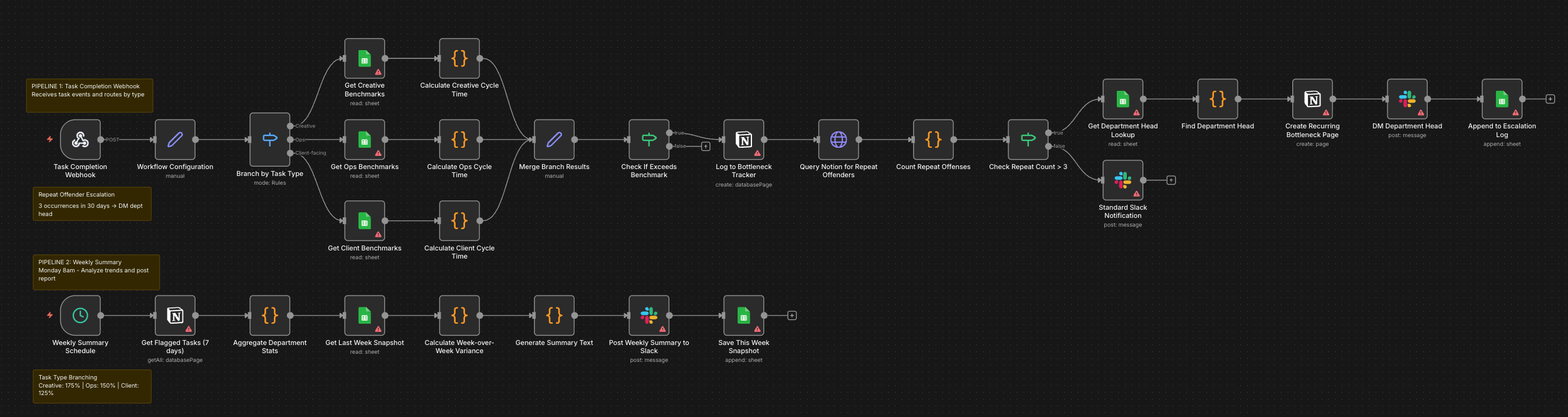
What Slow Teams Are Actually Working Against
People adjust to the systems they're given. If your team is slow, check what they're working against. Long approval chains. Unclear handoffs. Tasks that require chasing someone for information before they can even start. Work that gets done, then redone because the brief wasn't clear.
None of that is a people problem. All of it is a process problem.
How to Find the Real Bottleneck
Find a task that takes longer than it should. Then actually walk through it. Watch it happen, or ask the person who does it daily to take you through it step by step.
You'll find waiting. Waiting for approvals, waiting for files, waiting for a reply to an email that should have been a system notification. Waiting is where time goes. And waiting is almost always a process failure, not a people failure.
The Fix: Simplify Before You Automate
Once you see the waiting, you can start fixing it. The most effective first move is usually simplification, not automation.
An invoice sits in someone's inbox for three days because it's unclear who needs to approve it. A client onboarding stalls because nobody knows which team owns the next step. A simple question takes a week to answer because the person who knows the answer wasn't looped in until the end.
These aren't technology problems. They're clarity problems. Fix the clarity and the delay often disappears on its own.
Where Automation Fits
Automation is useful here, but it's not always the first move. Map the process first. Fix what's broken. Then automate what's left. Building automation on top of a flawed process just makes the flaw permanent.
Your team is not the constraint. The way work moves through your organization is. Fix that, and you'll be surprised what your team is capable of.
There's a morale payoff too. People stop dreading the parts of their job that are tedious and unclear. That's not a soft benefit. A team that isn't constantly working around broken systems has more energy for the work that actually matters.